
Tungsten Alloy Scatter Grenades
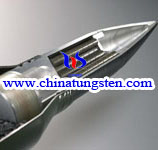
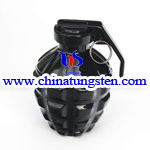
Instead of a single detonation, tungsten alloy scatter grenades spring open and tosses 4 charges into the surrounding area, which detonate on impact within a 2 to 4 meter radius around the original target area, confounding enemy forces and causing general chaos. Tungsten alloy scatter grenades are currently available in high explosive, fragmentation, and smoke charges and come available in both hand thrown and launcher versions.
The first tungsten alloy scatter grenades appeared in the Byzantine Empire, not long after the reign of Leo III (717-741). Byzantine soldiers learned that Greek fire, a Byzantine invention of the previous century, could not only be thrown by flamethrowers at the enemy, but also in stone and ceramic jars. Later, glass containers were employed. Byzantine hand grenades with Greek fire in the 10th to 12th centuries are on display in the National Museum at Athens. The use of Greek fire, or rather variants thereof, spread to Muslim armies in the Near East, from where it reached China by the 10th century.
Some tungsten alloy scatter grenades were small enough to be employed against enemy troops and be considered as primitive hand grenades.
 |
 |
 |
As tungsten alloy scatter grenades high density with small capacity, high temperature resistance, reduction in press down-time, minimal extruded metal pick-up, high impact resistance and crack resistance, wonderful shock resistance, good corrosion resistance, etc. Therefore, tungsten alloy scatter grenades are increasingly welcome by public, and tungsten alloy scatter grenades are suitable material for ammunition.
If you have any interest in tungsten alloy scatter grenades, please feel free to email us: sales@chinatungsten.com, sales@xiamentungsten.com or call us by: 0086 592 512 9696, 0086 592 512 9595.
More Info>>
1.Armor Plating
2.Cubes for Defence Military
3.Prefabricated Fragments
4.Tungsten Penetrator





 sales@chinatungsten.com
 闽公网安备 35020602000140号